Fast Supply Solutions
We match your technical product needs with the right manufacturers and quickly organize the process for competitive prices and short delivery times.

An RO chemical programme is based on feedwater analysis and membrane projection. Antiscalant, pH adjustment, dechlorination, biological control and CIP cleaning follow membrane limits and foulant type.
An RO chemical programme is based on feedwater analysis and membrane projection. Antiscalant, pH adjustment, dechlorination, biological control and CIP cleaning follow membrane limits and foulant type.
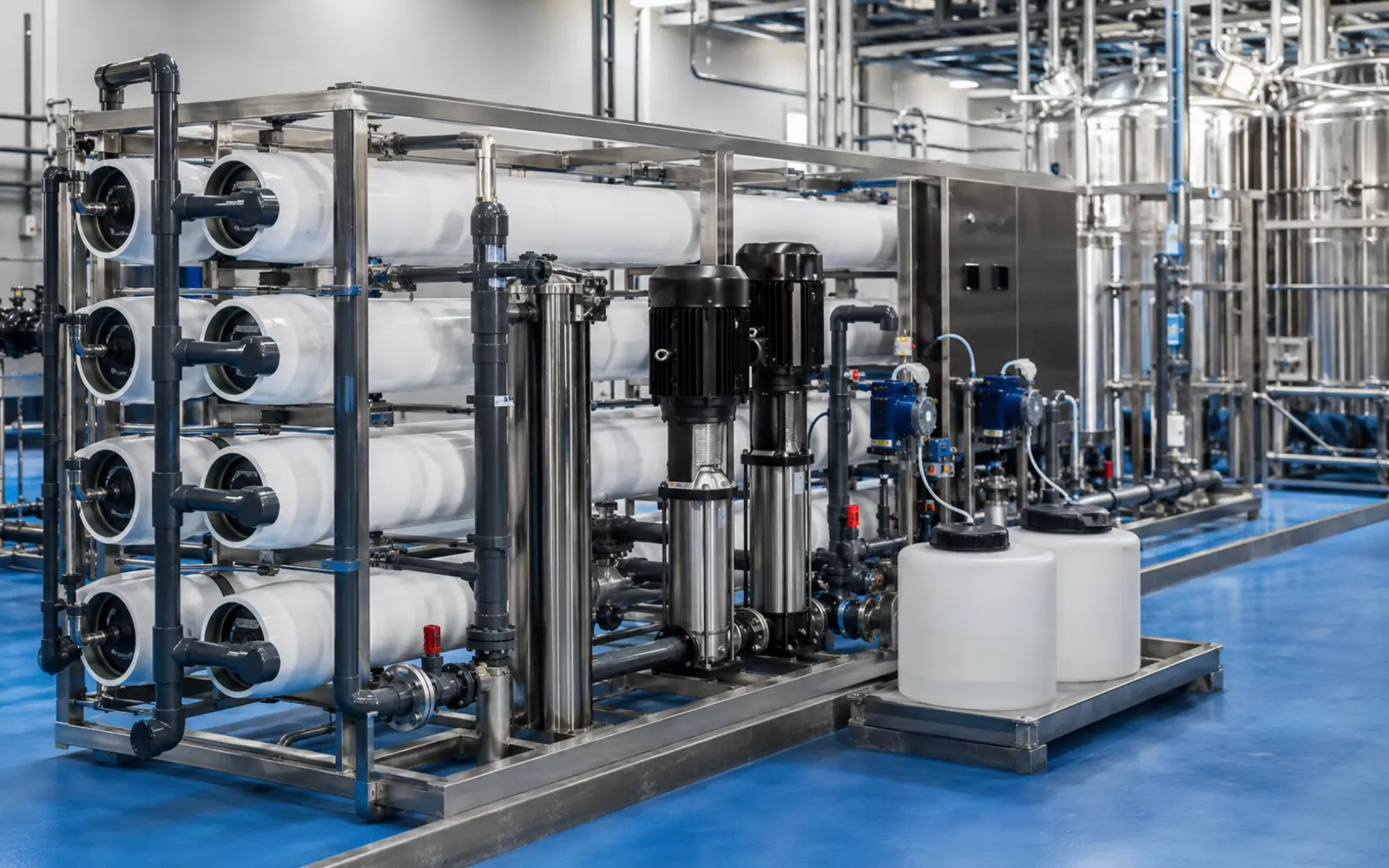
Hardness, alkalinity, sulfate, silica, barium/strontium, iron, SDI and target recovery are modelled together. Antiscalant type and dose follow saturation calculations; chemistry does not replace inadequate pretreatment.
Oxidants such as free chlorine must be controlled to the polyamide membrane limit. Dechlorination chemicals are dosed by chlorine/ORP measurement; overdose and stagnation can increase biological risk.
Mineral scale, metal oxide, organics, colloids and biofilm require different cleaning. Low- or high-pH cleaner follows foulant analysis, membrane type, allowed pH/temperature and manufacturer procedure.
Track normalized permeate flow, salt passage, differential/feed pressure, conductivity, pH, SDI and dosing calibration. Trends indicate cleaning need better than one fixed calendar interval.
| Area | Purpose | Control |
|---|---|---|
| Antiscalant | Delay mineral precipitation | Projection, recovery, analysis |
| Dechlorination | Remove oxidant upstream | Chlorine/ORP, calibration |
| CIP cleaning | Remove identified foulant | pH, temperature, flow, foulant |
| Preservation | Protect idle membranes | Duration, preservative, isolation |
No. It follows analysis, recovery, pH, temperature and membrane projection.
No. Membrane type, foulant and allowed pH/temperature limits govern cleaning.
From trends such as normalized flow or rejection loss and differential-pressure increase.
Full ion analysis, SDI/turbidity, membrane model/count, flows, recovery, pressures, pretreatment and performance trends.