Fast Supply Solutions
We match your technical product needs with the right manufacturers and quickly organize the process for competitive prices and short delivery times.

Core selection should not be based on price or thickness alone. Thermal performance, fire behaviour, acoustics, weight, moisture, service temperature and project regulations must be evaluated together.
Core selection should not be based on price or thickness alone. Thermal performance, fire behaviour, acoustics, weight, moisture, service temperature and project regulations must be evaluated together.
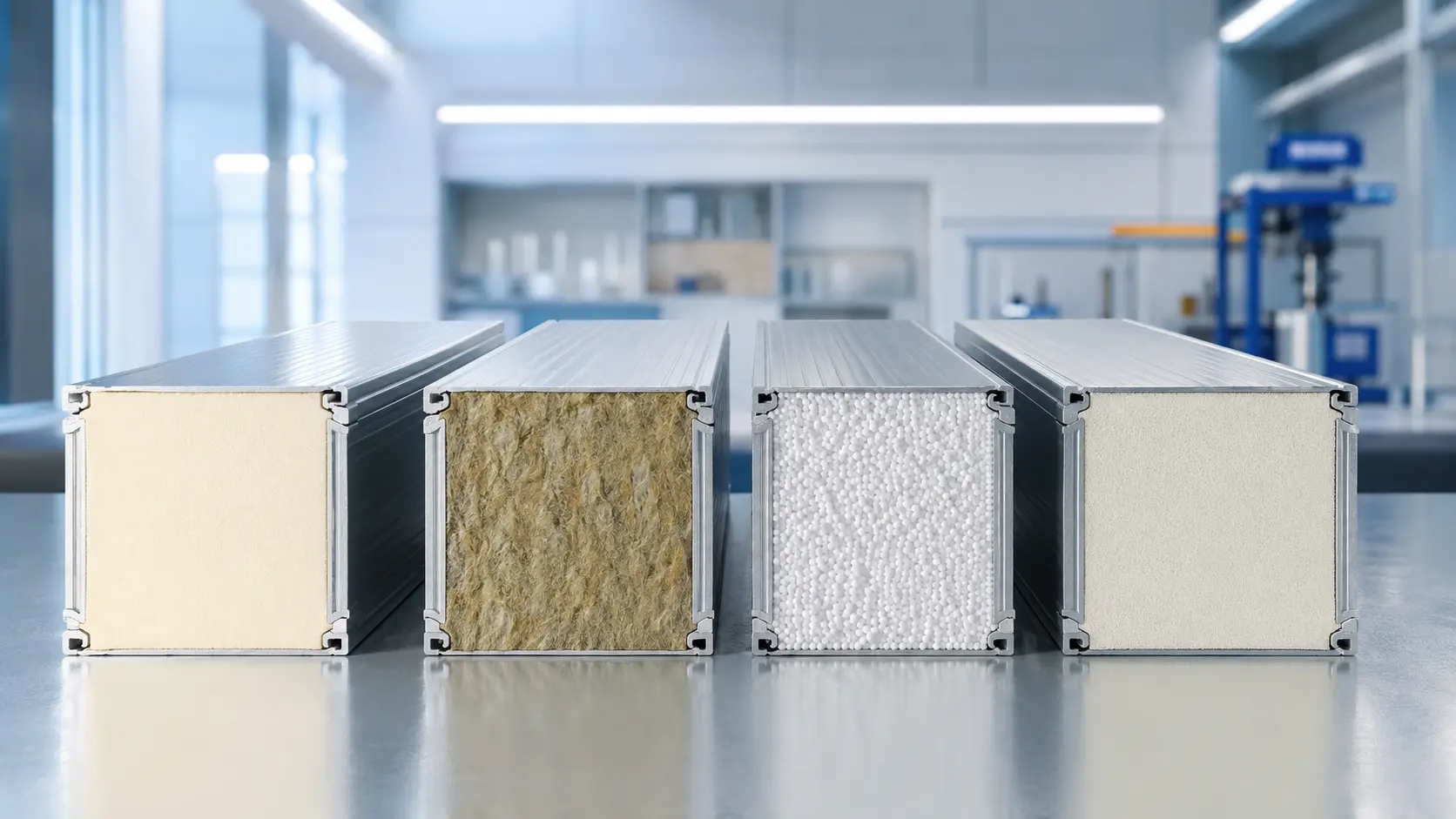
PIR and PUR foam cores offer low thermal conductivity and low weight. Depending on formulation, PIR may provide improved fire behaviour compared with PUR; the final classification must be verified in product documentation.
Mineral-wool cores are selected where fire and acoustic performance are priorities. Higher density and weight must be considered in structural and installation planning.
EPS is an economical, lightweight insulation option. Fire and temperature requirements must be verified against the project classification and product certificates.
| Core | Key benefit | Check |
|---|---|---|
| PIR | Thermal performance/improved fire behaviour | Product classification |
| PUR | Thermal performance/low weight | Fire and temperature |
| Mineral wool | Fire and acoustics | Weight and installation |
| EPS | Economy and low weight | Fire class |
There is no universal best option; targets, regulations, budget and service conditions determine selection.
No. PIR can offer thermal and weight advantages, while mineral wool may suit specific fire and acoustic targets.
No. Facings, joints and the complete panel construction affect classification.
Specify the application, roof or wall type, core material, panel thickness, steel thicknesses, colour, total area, accessories, project location and delivery point. Fire and thermal performance must be confirmed against the project specification before ordering.