Fast Supply Solutions
We match your technical product needs with the right manufacturers and quickly organize the process for competitive prices and short delivery times.

Valve selection in industrial facilities should not be based only on size and connection type; fluid properties, pressure-temperature values, material compatibility, installation conditions and control requirements should be evaluated together.
Valve selection in industrial facilities should not be based only on size and connection type; fluid properties, pressure-temperature values, material compatibility, installation conditions and control requirements should be evaluated together.
A pipeline may carry water, steam, air, gas, oil or chemical fluids. Temperature, pressure, chemical behavior, particle content and corrosion risk directly affect body, sealing and internal component material selection.
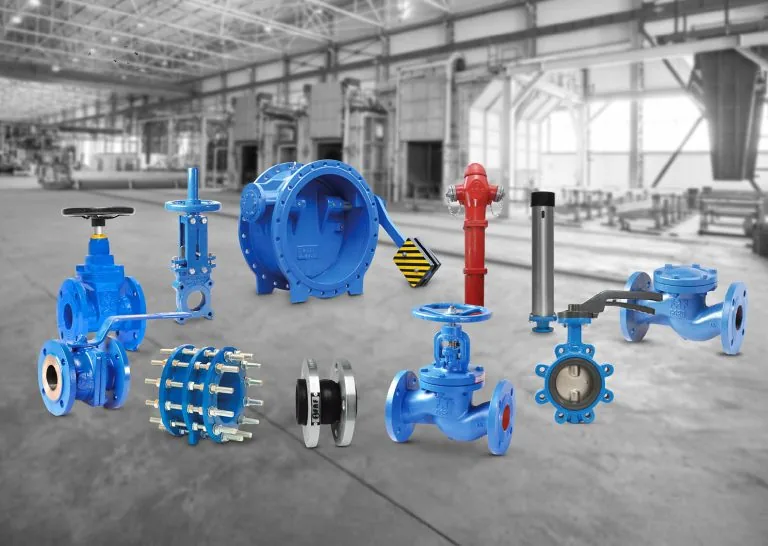
Ball valves are suitable for quick shut-off, butterfly valves for compact installation in larger diameters, gate valves for water and infrastructure lines, and check valves for preventing reverse flow. For flow regulation, valve types with suitable control characteristics should be considered.
Nominal diameter, PN pressure class, operating temperature and connection standard should be evaluated together. Flanged connections are common in heavy-duty applications, while threaded, wafer or lug connections may be selected according to space, diameter and installation conditions.
Body material, stem, disc/ball and sealing elements define service life. Cast iron, ductile iron, stainless steel, EPDM, NBR or PTFE should be selected according to fluid chemistry, pressure and temperature.
A pipeline may carry water, steam, air, gas, oil or chemical fluids. Temperature, pressure, chemical behavior, particle content and corrosion risk directly affect body, sealing and internal component material selection.
Ball valves are suitable for quick shut-off, butterfly valves for compact installation in larger diameters, gate valves for water and infrastructure lines, and check valves for preventing reverse flow. For flow regulation, valve types with suitable control characteristics should be considered.
Nominal diameter, PN pressure class, operating temperature and connection standard should be evaluated together. Flanged connections are common in heavy-duty applications, while threaded, wafer or lug connections may be selected according to space, diameter and installation conditions.
Provide the fluid, DN, PN, operating temperature and pressure, connection standard, body and sealing materials, actuation type, quantity and delivery location. Chemical compatibility and pressure-temperature limits must be confirmed before ordering.