Fast Supply Solutions
We match your technical product needs with the right manufacturers and quickly organize the process for competitive prices and short delivery times.

Correct fan selection matches the required airflow and system pressure loss at one duty point and sustains that point safely with a suitably rated motor.
First calculate the required airflow and total system pressure loss. Both values must be met at the same point on the fan curve, and motor power must then be verified for fan efficiency, air density, starting and operating range.
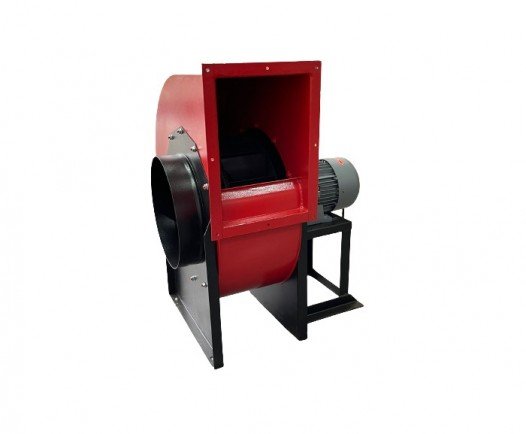
Airflow is calculated from the room function, required air-change rate, occupancy or process load, heat load, contaminant source and applicable design criteria. Capture velocity at the hood or extraction point is also important in local exhaust systems. Branch airflows and simultaneous operation must be assessed in multi-zone systems.
The fan must overcome losses from duct friction, bends, dampers, filters, silencers, terminals and other components. Static pressure relates to system resistance, while total pressure includes both static and velocity-pressure components. The pressure definition must be stated clearly when requesting quotations or comparing performance.
System resistance increases as airflow rises. The intersection of the fan curve and system curve is the actual duty point. A point near an unstable region, a low-efficiency zone or the motor load limit may cause noise, vibration, excess energy use or inadequate performance. Selection should therefore use approved manufacturer performance data.
Shaft power is assessed from airflow, fan pressure and fan efficiency. The motor is selected for the duty point, air density, starting conditions, control method and a reasonable margin; unnecessary oversizing should be avoided. A variable-frequency drive can reduce energy use where airflow demand varies, provided the permitted motor and fan speed range is maintained.
Fan data may be stated at a reference air density. High temperature or altitude changes density and therefore pressure and power. Moisture, particles, abrasion or corrosive constituents also affect material, coating, sealing and motor protection. Final selection must be corrected to the actual operating conditions.
Airflow is commonly stated in m³/h, m³/s or L/s. Units and reference air conditions must match when comparing data.
Duct length and size, bends, filters, dampers, silencers and terminals create the total resistance that the fan must overcome at design airflow.
No. The motor should cover the duty point, starting condition and a reasonable margin; unnecessary oversizing may increase cost and reduce operating efficiency.