Fast Supply Solutions
We match your technical product needs with the right manufacturers and quickly organize the process for competitive prices and short delivery times.

A grille, diffuser or air valve should not be selected from duct size alone. Design airflow, effective velocity, throw, drop, pressure loss, sound level and room geometry must be checked at the same operating point.
A grille, diffuser or air valve should not be selected from duct size alone. Design airflow, effective velocity, throw, drop, pressure loss, sound level and room geometry must be checked at the same operating point.
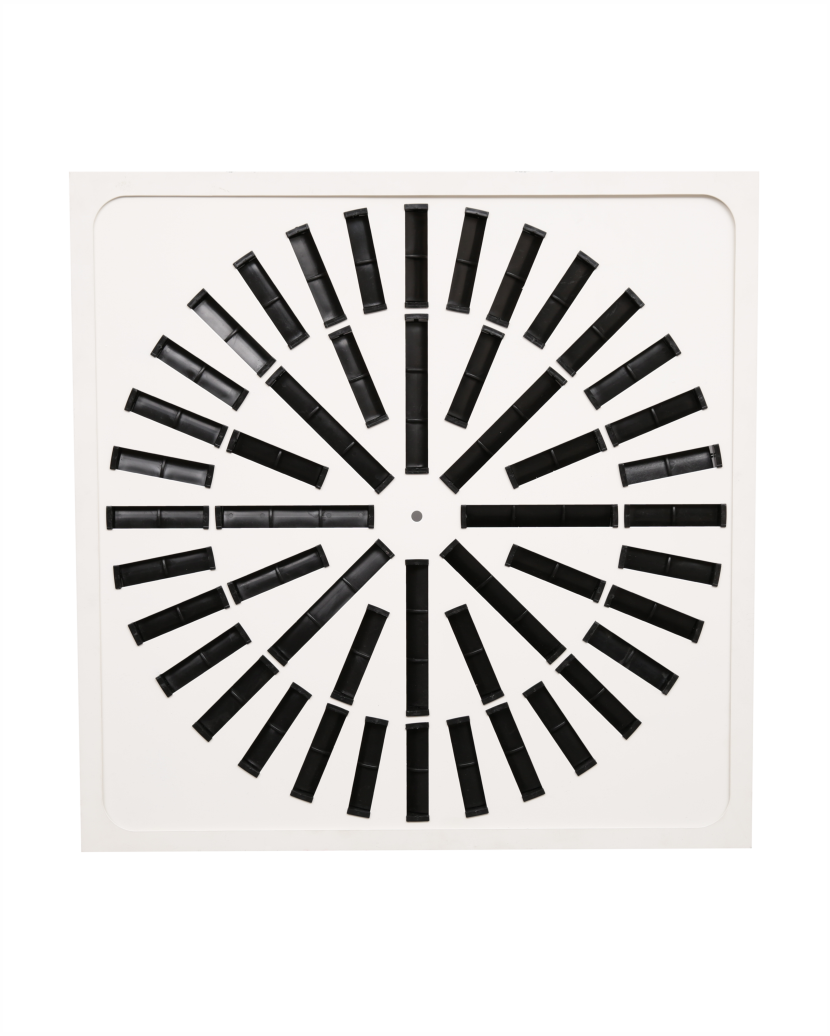
Required airflow comes from the room calculation. A larger terminal may reduce face velocity and noise at the same airflow, but nominal size alone is insufficient because blade geometry and effective area differ. Use manufacturer performance data.
Supply air must reach the occupied zone without creating objectionable draught. Ceiling height, temperature difference, Coanda effect, terminal position and adjacent air streams influence throw and drop. Heating and cooling cases should be checked separately.
The terminal, damper, plenum box and flexible connection contribute to pressure loss and noise. Verify the selection against the room acoustic target and actual duct pressure, not only a catalogue NC/NR value.
Provide product type, neck or overall size, quantity, airflow per terminal, mounting position, ceiling height, allowable sound level, colour, damper and plenum requirements and duct connection size.
| Value | Influence |
|---|---|
| Airflow (m³/h or L/s) | Required capacity |
| Effective velocity (m/s) | Pressure loss and noise |
| Throw/drop | Air delivery to occupied zone |
| NC/NR or dB(A) | Acoustic comfort |
| Pressure loss (Pa) | Fan and duct calculation |
No. Different blade arrangements create different effective areas, pressure losses, throws and sound levels at the same nominal size.
No. It may reduce velocity and noise but may also provide insufficient throw; distribution pattern and architecture must be checked.
Yes. Dampers, plenums and connection pieces add resistance.
Design airflow and allowable sound level for each terminal, together with size, mounting and accessory requirements.