Fast Supply Solutions
We match your technical product needs with the right manufacturers and quickly organize the process for competitive prices and short delivery times.

An air damper regulates airflow or pressure during normal operation; a fire damper closes to maintain fire compartmentation; a smoke control damper opens or closes according to the designed smoke-extract or pressurisation scenario. They are not interchangeable by name alone.
An air damper regulates airflow or pressure during normal operation; a fire damper closes to maintain fire compartmentation; a smoke control damper opens or closes according to the designed smoke-extract or pressurisation scenario. They are not interchangeable by name alone.
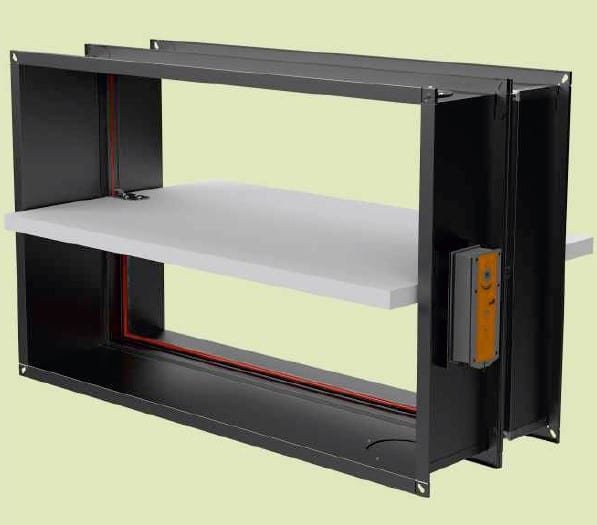
Manual or motorised dampers balance, isolate or regulate constant and variable airflow in normal HVAC service. Unless it has the required fire or smoke-control certification, a standard air damper is not a life-safety damper.
A fire damper closes where a duct crosses a fire compartment boundary to restrict flame and heat transfer. Wall/floor construction, installation orientation, fire-resistance classification, release device and approved installation detail must be checked together.
These dampers open or close according to the smoke-extract or pressurisation scenario. Temperature class, leakage, cycling, actuator and fire-alarm control compatibility are selected to the project.
State damper type, clear duct size, wall or floor installation, fire class, smoke scenario, actuator supply, fail-safe position, end switches, leakage requirement and quantity.
| Damper | Primary function | Normal position |
|---|---|---|
| Air damper | Airflow/isolation control | Project dependent |
| Fire damper | Maintain compartmentation | Usually open; closes on heat/alarm |
| Smoke control damper | Smoke extract or pressurisation | Scenario dependent |
| Fire and smoke damper | Combined safety function | Certified scenario |
No. It requires the applicable fire testing and classification.
No. Their functions and test criteria differ; combined products are separately classified.
Clear opening, casing size and installation opening can differ; check manufacturer details.
Yes. State supply voltage, spring return, fail-safe position and auxiliary contacts.